About a life devoted to the love for Folklore, Mythology, Legends and.....Art
Showing posts with label New products. Show all posts

Saturday, February 19, 2011

New Shadow Puppets!


Faust and Mephisto


Hansel and Gretel


The Sandman

Another series of hand-cut shadow puppets! Reproductions are soon for sale at my shop.

I hope you all like it!

Theater Decors


I decided to try something new for my shop... theater decors. I hope you all like it!
Reproductions are soon for sale at my shop!

Monday, January 24, 2011

DIY Shadow Theaters


I have been working on some new products for my shop for the last couple of weeks. One of these "experiments" resulted in a shadow theater which people can make themselves at home.

I would have loved to play with it myself when I was a kid.... Actually I love playing with it now as well!

More exciting shadow puppetry related news will follow soon!


Sunday, October 10, 2010

Witte Wieven - A Dutch Folktale

(Please, click picture for bigger and better view)

'Why all these Dutch folktales all of the sudden? ' some of you might be thinking. Well, I have started a new folklore related project a few weeks ago about which I will tell you all later this week.
But first I would like to share with you my latest drawing, which is also part of the project, named: "Witte Wieven". These two small words have two different meanings. Witte can mean white or (in dialect) wise and wieven means women. Thus it can refer to white women or wise women. In this case both interpetations would actually be correct.

These Witte Wieven are always described by the people as white, ghostly, witch-like figures, often brought in connection with mist. They haunt the old burial-mounds, which can still be found in the Netherlands, dating back to the Iron Age. It is not a coincidence that these ghostly women are haunting these burial-mounds because the Witte Wieven are infact the vestiges of the old Germanic priestesses worshipped by the people. The church obviously disapproved with this sort of worship like they cursed the old burial mounds, being graveyards of heathens. And soon the two: Germanic priestesses and the burial-mounds, became connected.

The people for a long time strongly believed in the powers of the Witte Wieven. They often left food for them in order to recieve their blessings. Their favorite food was balkenhaze, which is the name for roast cat and pancakes. It was believed that if one should refuse to offer the Witte Wieven food they would take revenge. They would kill cattle by sticking long needles into the animal bodies and burn down sheds and if you were really unlucky they would kidnap you. They were especially known for kidnapping young mothers, because they needed them for feeding their young dogs. It was said that the Witte Wieven sometimes had such long breasts, because of the feeding, they could throw them over their shoulders. Hence the reason why they preferred other women to do the job, I guess. Once these women were captured they had to stay with them for 7 years, after which they were released.

The Witte Wieven were also great sorceresses; who could turn wood into gold and such. This is why the people were making offerings, in hope they would share these gifts with them.

There must be hundreds of folktales related to the Witte Wieven: stories about revenge they took on young rude boys, women they kidnapped and about women who knew how to escape. Tales about farmers who owe their riches to them and farmers who lost it all because they broke with the tradition of food-offerings.

Nowadays, the people in the eastern parts of the Netherlands no longer believe in these matters, but the tales they have survived. But if you are lucky to meet one of the old farmers they will assure you all of it is true and they still look at the burial mounds with a suspicious eye. Of course, they know better....

Saturday, September 18, 2010

Shop Update!


The new reproductions have arrived today and thus I am happy to announce my shop is once more filled with twenty new Shadow-Puppet reproductions. Enjoy!

LINK (my shop at Etsy)
LINK (my shop at Dawanda)

Sunday, September 12, 2010

De Bullebak - A Dutch Folktale


I know I said last time I would draw one of the legends I collected during my trip in France, but for some reason I just could not get to it yet.

However an image of another legend, I grew up with as a kid, haunted me for days, till I at last put it down on paper. It is the story of the Bullebak. A Dutch water spirit used by parents to frighten children and keep them away from the water. Something of which we have a lot here.

Now the word bullebak is hard to translate literally, but in means as much as bully and refers to someone or something which harasses another person because he likes to do so. This word is used in general but also refers to a terrifying water spirit. Its description is quite diverse and parents have become very creative with it as well through time.

One of these descriptions is that of a creature living in the water with the head of a bull. Others say that the creature has never been seen but has the habit of luring children with shiny little stars to the waterside and then grab them. Many of these descriptions also include a big fish.

I however grew up with the story that the Bullebak was a gigantic bullfrog. When it caught you it would drown you and eat you up whole. I can't even recall how many times my grandmother warned me for the Bullebak, but it must have been often. Even now at the age of 25 I still can recall the images I had in my mind as a kid when listening to these stories.

Well, that is the story of the Bullebak I grew up with! (And for those who are interested, prints will soon be for sale at my shop.)

Monday, August 23, 2010

More Shadow Puppets!

The Good Fairy

Aladin and Djini

Mary Poppins

And again I have made another series of new (hand-cut) shadow puppet designs.
I hope you all like it!

Reproductions are soon for sale at my Etsy shop: LINK

Thursday, August 19, 2010

Alice in Wonderland - Shadow Puppets


Again another series of new (hand-cut) shadow puppet designs!
This time I made puppets for my new Alice in Wonderland collection.

Reproductions are soon for sale at my Etsy shop: LINK

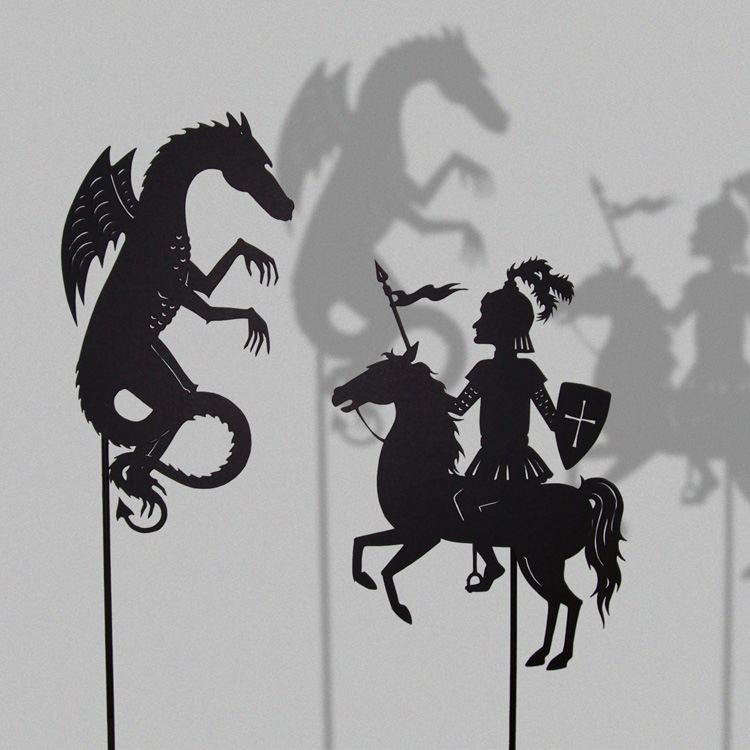
Saint George and the Dragon


Again, another series of new (hand-cut) shadow puppet designs !

I know I have made these puppets before, but I just love the story of Saint George and the Dragon. So, I decided to make them once more and try to improve them.

For those of you who are not familiar with the legend please check out the following LINK

Reproductions are soon for sale at my Etsy shop: LINK

Friday, August 13, 2010

Fairy Tale Shadow Puppets

Rumpelstiltskin

The snow queen

Little Red Riding Hood & the Big Bad Wolf


Another series of new (hand-cut) shadow puppet designs. Reproductions are soon for sale at my Etsy shop: LINK

I hope you all like it!

Saturday, August 7, 2010

Angel Shadow Puppets


Reproductions will soon be for sale at my Etsy Shop: LINK

Biblical Shadow Puppets


Maria and Joseph


Ark of Noah

I decided to make a couple of shadow puppets based upon the Biblical stories I grew up with as a child.

The original hand-cut shadow puppets as well as the reproductions will soon be for sale at my Etsy Shop: LINK

Tuesday, June 1, 2010

Fairytale Papercuts and some other things


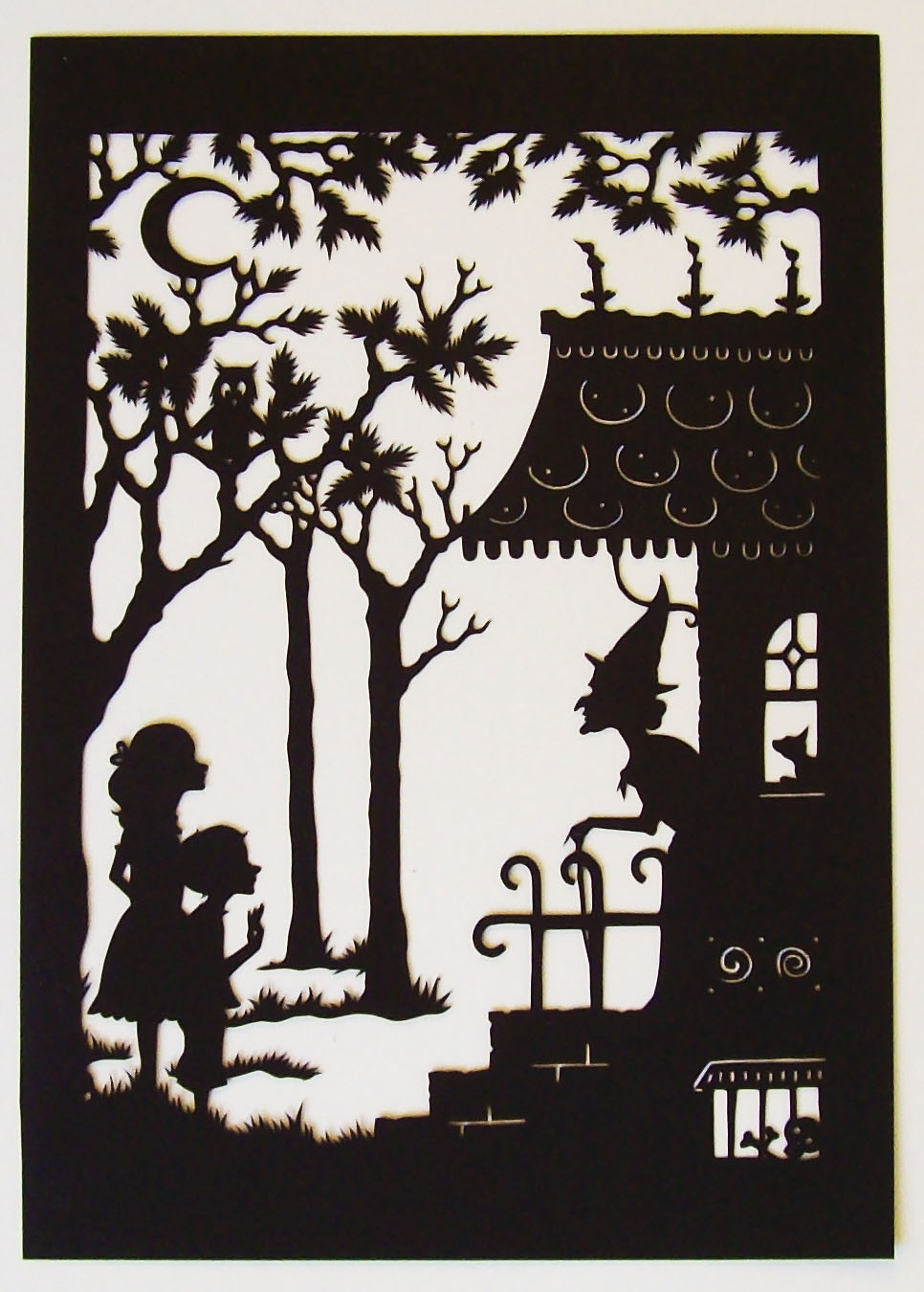
About three weeks ago I started making a series of handcut papercuts based upon the fairytales of the brothers Grimm. I have done four fairytales so far: Hansel and Gretel, Snow White, Little Red Riding Hood and Rumpelstiltskin.

As a child I was always very fond of these tales and I could dream away for hours while looking at the illustrations I found in the fairytale books my mother kept in the attic. The idea of making my own illustration of these tales some day has ever since been haunting me, but I never had the time for it untill a couple of weeks ago.

Though the original plan was to make the illustrations with ink, I ended up making papercuts!

For those of you who wish to see the other three papercuts as well, please visit my papercut gallery to the left or visit my Etsy shop: Link

Currently these original papercuts are for sale, for a small price, so if you happen to be interested just send me a message or visit my shop at Etsy.

Also new at my shop are Custom gift vouchers. With these vouchers you can surprise someone with a custom, handmade shadow puppet or papercut based upon his or her own wishes.


Thus, lots of new things have been uploaded at my shop and many more are about to come!


Friday, March 26, 2010

New Shadow Puppets!

New reproductions and original hand-cut shadow puppets will arrive at my shop during next week. Here you can already have a glimpse of a couple of new designs!


Baba Yaga


Peter Pan


Fairy Coach


Dragon Rider

Monday, November 23, 2009

The Morskoi Tsar; A shadow puppet based upon a Russian folk tale

This weekend I finaly had some time left to work out one of the shadow puppets I had in mind for a very long time. Below you can see my version of the Morskoi Tsar, who was in former days known as the water king in the folklore of Russia.


He appears in many Russian folk tales and it is said that he lived underwater in beautiful crystal halls together with his daughters. They are the well known Rusulkas, maidens of extraordinary beauty who can shape shift in the form of an animal if they wish. They are mostly seen in the form of water birds such as swans , geese or ducks.

Most people were afraid of the Morskoi Tsar as it was believed he hunted on humans and drowned them if he managed to catch one. It is also said that sometimes he would seek for boys to marry his daughters.

What the Morskoi Tsar is doing here? Is he hunting for a groom or is he hunting humans? Well, you have to seek that out yourself.....


The original hand-cut puppet is now for sale at my Etsy Shop!

Thursday, October 29, 2009

The Little Prince Shadow Puppet; A tribute to Antoine de Saint-Exupéry


(Please, click picture for bigger and better view)

The hand-cut, shadow puppet shown above is my tribute to Antoine de Saint-Exupéry, the writer of 'The Little Prince'. I carry this book with me, every day, in my handbag. Even more, I treasure it like some kind of crucifix, holding on to it whenever I am in need of consolation. This book has been part of my life for such a long time that it has become a true friend to me. And thus I wished to do something back for the little prince and his creator.

To show my appreciation and admiration, I thought there could not be a better scene to depict then the scene in which the little prince meets the fox. It is a story about true friendship as the following piece will show us....

It all starts when the fox, who is at first a stranger to the little prince, asks the boy to tame him. The little prince puzzled by these words asks the fox what 'tame' means, on which the fox answers:

"It is something which is too often forgotten, it means to establish ties....

To me, you are still just a little boy like a hundred thousand other little boys. And I have no need of you. And you have no need of me, either. To you, I am just a fox like a hundred thousand other foxes. But if you tame me, we shall need one another. To me, you will be unique. And I shall be unique to you.....

If you tame me, my life will be full of sunshine. I shall recognize the sound of a step different from all others. The other steps send my hurrying underground. Yours will call me out of my burrow like the sound of music. And look yonder!Do you see the cornfields? I do not eat bread. Wheat is of no use to me. Those cornfields don't remind me of anything. And I find that rather sad! But you have hair the color of gold. So it will be marvellous when you have tamed me! Wheat, which is also golden, will remind me of you.And I shall love the sound of the wind in the wheat....

The fox became silent and gazed for a long time at the little prince. I beg of you..... tame me! he said."

The little prince, not aware of the important lesson he is about to learn, tells the fox he hasn't got time to tame him. As he has many things to discover and a lot of things to understand. But then the fox replied:

"One can only understand the things one tames"

Thus the little prince is tempted and finally agrees to tame the fox. From then they meet one another every day at the same spot and at the same time and through time they become close friends until eventually the day came for the little prince's departure.

But if you would like to know how the story continues, you should read the book for yourself. Trust me you won't regret it and it is most likely you will read the book over and over again.
I know I do, I must have read it about thirty times by now.

There is just one other thing I would like to say:

Thank you Antoine de Saint-Exupéry, thank you....

(Soon, this puppet will be for sale at my Etsy shop)

Monday, October 5, 2009

Folk Magic

Having made so many drawings for the tell me a story project, I thought it was time for something else. Not that the project is boring me, infact, quite the opposite, I am pleasantly surprised by all those wonderful submissions, but I do miss it sometimes to pick a subject myself. One of those subjects which are close to my heart is folk magic. Being it an old way of fortelling the future or invoking a catholic saint to find something back which is lost, I love it all just as much.


(click picture for bigger view)

Divination with lead

The drawing shown above depicts a scene in which two girls are trying to predict their future. They do this by pouring hot, liquid lead into a bucket filled with cold water. The shapes thus formed are "read", all of them having their own meaning. Lead in the shape of a star meant luck, crosses meant suffering, man or sack like figures meant wealth, an aureole meant marriage but the shape of an animal meant death. This method of divination was known throughout all of Europe and was often used on New Years eve to see what the next year would bring. This ceremony was practiced even in recent days. Of course young girls used it for a much less complicated goal, they told each other that the letters which appeared in the water would predict the name of their future husband.
Now this all seems to be not much more then a game for the youngsters, but in fact this divination method is of ancient origin. The Latins instead of lead used wax, once the wax was coagulated they took these small pieces to bed and the dream they would dream that night would tell them their fortune.

There are so many more divination methods closely related to the former, but it would take an entire book to describe them all. However if you are just as much interested in these rituals as I am you can always drop a line. I'm always in for hearing new stories and I love to share all I learned about these matters :)


(click picture for bigger view)

"Love Potion"

The second drawing depicts a scene in which a mother makes her daughter a "love potion". It was believed that to obtain ones love you should boil his or her socks in water and then drink the extract. This was believed, like it was believed with all "love potions" containing human fluids of some kind, to be most effective. For people who are wondering why it is that this was believed to be so effective it might be interesting to learn a bit more about sympathetic magic. You can find more information about it here

I am intending to make more drawings featuring folk magic, so if this is what you are interested in ,keep an eye on my blog as more will follow soon.
(the information given above has been partly adopted from; 'Lexikon des Aberglaubens', written by Helmut Hiller)

PS; for those who are interested, prints accompanied with story are now available at my Etsy shop!


Thursday, September 3, 2009

The Snake Amulet; a brief history on folk-belief and legend


(click picture for bigger view)

At last, I found some time to write a piece about my latest handmade amulet. To write about serpent-lore and the snake in talismanic-magic is quite a task as the information on this subject is endless. But at the other hand, it is also very vague and there are many different theories concerning the subject. This all makes it almost impossible to write a good blogpost about this subject as my space is limited. Nevertheless I will give it a try.

I cherish a great fascination for the snake in folklore and legend. Its is such a prominent image in art, folklore and religion all over the world. Though its appearance is common it is never the same. The snake, because of its killing nature and poisonous bites became a symbol of death. But as the snake renews its skin periodically it is also a symbol of resurrection and life at the same time. Though the snake as a symbol of death is a very interesting topic (worth an entire book), this post will be about its positive side, namely; its association with life and resurrection. As it is this part which plays an important role in how the snake made itself so popular as an amulet.


Health

The snake, as a symbol of life, also became a symbol of health. There are hundreds of folk-remedies which contain snake parts. Especially snake fat was supposed to be a great remedy for all sorts of ailments. For example: the famous Chinese snake-oil, which has been very popular in America for quite some time, is supposed to be a great remedy for painful joints. Though its popularity in the west has decreased snake-oil is still sold in many traditional Chinese pharmacy-stores.
In ancient Egypt people believed that snake fat allowed bald men to grow hair and today in Israel you can get snake massages. The crawling motion of the creatures on your body is supposed to be very healthy and relaxing. But, probably the most fascinating remedy of all must be the pulverized, dried, snake skin as a cure for snake bites. Like said before the snake skin was a symbol of resurection and life, hence the reason people considered it a great remedy against the deadly poison. This shows us once more how death and life came together in the appearance of the snake.

And of course there is the Greek myth about Asclepius, the son of Apollo and Koronis. From a distance Asclepius observes a snake which carries some herbs. With these herbs he cures another snake which was fatally wounded. Asclepius from then on had the knowledge how to "cure" death. He used this knowledge several times and brought back people from the death. The gods, of course, were furious at him. Because his actions would make him a man equal to the gods. Zeus therefor had to kill him to prevent the entire human race from becoming immortal.
In honor of Asclepius, snakes were often used in healing rituals. Non-poisonous snakes were left to crawl on the floor in dormitories where the sick and injured slept. Nowadays the serpent-entwined staff ,the symbol of Asclepius, is still seen in many medical emblems in the west.

Not only in the West snakes were associated with health, it is said that Buddha once changed himself into a Naga (mythical creature, half human, half snake) to heal people.

Though I am certain that among some people snakes are still killed for their supposed healing powers, in general (especially in the west), the killing of animals became taboo. As with many old remedies which once contained animal- (or human-) parts, medicines made of snake slowly disappeared. However the snake as a symbol of life and health remained and thus wearing a snake amulet was supposed to give you a good health. In some cultures it is believed to protect you against snake bites.


Love, Fertility and sexuality

Closely related to life is birth. So it will not be a surprise the snake also accompanies goddesses associated with birth and fertility. One of these goddesses was Eileithyia, the Cretan goddess of child-birth. In a cave, where she was supposedly born, named; The cave of Eileithyia she was worshipped for a very long time. The Greeks worshipped her as well. According to Pausanias, a Greek traveller and geographer, there was a shrine at Olympia sacred to Eileithyia. A virgin-priestess guarded the place and took care of a serpent that she offered honey cakes and water.
Interesting is that in Ugarit, an old Syrian city, there was an tradition by which the groom offered his bride a snake (or some sort of pastry in the shape of a snake) after the wedding. It would not surprise me if this tradition is related to some sort of fertility goddess, to ensure pregnancy.
Cookies in the shape of snakes, named Koerabithes, can still be found in Greece where it is said to be a favorite delicacy among young lovers. I have also seen antique wedding-rings in the shape of snakes.

Other gods and goddesses of fertility depicted as snakes or accompanied by snakes are; the Assyrio-Babylonic Lakhmu and lakhamu, a male and female serpent who gave birth to heaven and earth, the Celtic god of fertility Cernunnos, who was depicted as a horned serpent and the Aztec Earth-Mother, Coatlicue who wore a skirt made of serpents.

In some cultures the snake is also associated with sexuality. We all know those sailors tattoos of women who are scantly dressed and instead have a lot of snakes wrapped around their bodys. These tattoo' were supposed to give a reflection of the wild and untamable nature of women. That a snake was part of these tattoos was no coincidence. Like I said in the beginning the snake also has a "bad" reputation as a seducer, impostor and killer.
In Christian tradition it was the snake who seduced Eve to eat from the forbidden fruit (interesting note is that the forbidden fruit is often depicted in many artworks as an apple, which is also a symbol of love and sexuality). Eve exposed her "true nature" by following the snake's advice and images of women with snakes often refer to this story.

These days snake blood is believed to be a great afrodisiacum in Asian countries and is sold at many places.
Though we don't offer snakes honey cakes anymore or worship the fertility goddesses, amulets of snakes are still believed sometimes to give fertility and attract love.


Wisdom

As the snake personifies all facets of life, he was considered wise as well. After all he knew all the secrets of life and death. Living among the gods, or in some cases being a god, made him a divine animal.
Athene, the Greek goddess was sometimes depicted with a snake as an emblem of her wisdom.
Though the snake was considered wise he was feared more then loved, as he often had the habit to use his wisdom against humanity. Was it not the snake of Eden who used his knowledge to make Eve commit a sin? But not only in Christianity the snake has a bad reputation. In the epic Mahabharata, the Nagas (deities depicted as half human, half snake) are often described as the most evil of all while they play a important role in heroic quests. Maybe it is therefor the snake was considered wise, as he knew ALL, not just the good, but the evil as well.

Because of this reputation many people thought carrying an image of the snake would reveal them secrets of life and would help them to make decisions in difficult times.


Magic and the Supernatural

Another interesting thing is the role of the snake in magic. As the snake was both good and evil, death and life, it was used in white magic as well as in black magic.
An example of white magic can be found among the people of Tuscany, where it was said; "that if one has something in the eye or throught, spit three times upon the ground and say":

"O grande Serpent
lo ti baccio il volto!"

("O great Serpent
I kiss thy Face!")


Amongst the same people it was a longtime custom to paint snakes with the head pointed down upon the wall. This was believed to ward of evil, including the evil eye. And indeed we can find many amulets depicting snakes which are believed to give protection against the evil eye.

Someone once told me that in South Africa people wear little amulets of snakes to protect themselves against water-snakes. The snakes who live in the water are sometimes believed to be many a reincarnation of Death. These deities can be malevolent and when people fall in the water it is likely they will drown you. Thus wearing an amulet should protect against these evil spirits.

There is among the Xhosa (an African tribe) a curious belief. This belief concerns the "Icanti" (love Snake), this snake is supposed to make woman irresistible to men, hence the reason why many would like to have one. To get such snake one most swallow a special medicine, from which the ingredient are only known to those of the tribe. This you must do every day, for a month. You will then start vomiting and in the vomit you will find a little snake. Next you have to take the little creature to the river, where it will grow. Once it is fully grown the woman puts it in a pot and keeps it at her home.
It is said that the Icanti is especially loved by prostitutes who make good money because of them!

Another example of the snake's magical powers: it was believed in Europe, for quite some time, the blood and fat of a snake enabled you to understand the language of animals. Some practicers of Hoodoo still believe eating the brains of a snake will give you conjuring skills. Moreover the snake is actually the center of many hoodoo practices and serpent-worship plays a very important role in the Hoodoo culture. Alas I do not have the space to write more about this interesting subject, maybe in a later post....

Though I have only given a few examples of white "snake-magic" it is clear how health, love and wisdom are recurring topics in these forms of magic all over the world.

The amulet

To get back to our starting point; an amulet depicting a snake is thus believed among many people to preserve magical powers and it would pass on all these characteristics upon its wearer.
Nevertheless, many people , especially in the west, have lost faith in the "old religion" and the snake as an amulet is now not much more then a decorative piece.

I however, can not look upon a snake amulet as just a fancy jewel. I am no snake-worshipper but I have great respect for its long tradition and I look with admiration upon this creature. There is something mystic about this creature, something which, despite my knowledge about folklore and magic, I can not define.


Making this amulet was thus very special for me, I guess you can say it was a sort of "tribute" to the snake.

O, incase you were wondering about the other features of this necklace, the red felted tie is not just mere coincidence. In the magic of the Southern Europe, (and among many other people as well) red is a very powerful color which symbolizes life and gives protection. Especially red wool is supposed to be very powerful and is a lucky charm on itself. The hand as well is a common image on amulets which function is mostly to ward of evil, depending on its position. But that is a whole other story, something for another time......

For those interested, this one of a kind snake amulet is now (or tomorrow...) available at my
Etsy Shop!


Tuesday, August 11, 2009

NEW! Halloween and Witch stencils.

The company Crooked River Stencils is currently offering stencils featuring my silhouette designs. These stencils are great for signs, decorating boxes etc. Below you can see some examples.


You can find these designs and others here.
I hope you like them!

For those who are interested, these two designs are also available as shadow puppets. You can find them at my Etsy shop.

Wednesday, July 22, 2009

Magic in a Box ; Medieval Catholic Amulets

Of all amulets and talismans known to me, the Catholic pieces are among the most interesting. Maybe it is because they do not only reflect peoples faith and hopes but also are a great source on history. These amulets and talismans are rarely original and are a combination between Ancient (heathen) believes and Christian symbolism. In this way they could be seen as a "religious time-line", showing us the developement from heathen faiths into Christian (folk-) believes today. Though this subject is certainly worth a good conversation I do not intend to go further on discussing this subject at the moment. But, I would like to share with you one of my new amulets based upon one of these old Catholic pieces.


The picture showing above is my "reproduction" of an amulet found in a woman's grave in the cemetery of Szentes Nagyhegy, east Hungary. The original was a small, silver, book-like amulet depicting a cross up front which has never been opened, thus the contains will remain unknown to us. Luckily many more of these little "boxes" were found through time and we know now that they were meant for talismanic use. These boxes, which came in many shapes; some of them being square and others being round, were most of the time filled with devotional objects. Common objects were; a Paternoster (prayer), images of Saints, but also herbs and gems which were supposed to contain magical powers to ward of evil, or even the devil himself.
Next to this, these boxes were also used for carrying along objects collected from the holy places pilgrims visited, reliques. This could be graveyard dirt from some grave where a Saint was buried or a piece of cloth which Jezus was supposed to have worn during his last day, really any sort of relic would do. These relics, sold by the churches, were a very important part of amulets as it was believed that the power of a holy person would transfer to anything he or she had touched during her life and therefor contained healing and protective powers.

These amulets were just as powerful as crucifixes and for a long time generally accepted by the Catholic church.
Of course I don't need to explain that wearing herbs, gems and images of god(s) was something new. Neither is the concept of taking small pieces of dirt or water from these so called holy places. These sort of amulets were seen among all races and are as old as humankind. They are most certainly not of Christian origin.
Nevertheless they make beautiful amulets and though not original, Christianity did give it's own very interesting interpretation to the contains of these boxes.


The little box I made is filled with a tiny bundle of Saint James Wort, known as one of the most protective and healing herbs in Christian Folk-medicine and Magic. It was supposed to protect against all evil influences such as demons, ghosts and witches. Also widely accepted was the 'fact' the devil himself was terrified of this herb and had no control over those who wore this herb as an amulet. It was especially favorable among pilgrims who ventured to the Holy Land.

As mentioned, the Paternoster (The Lord's Prayer) was used for talismanic use as well, as were many other biblical texts and prayers. The funny thing about the Paternoster is that the word "Paternoster" itself was supposed to have magical powers. Therefore many amulets are simply just showing this word instead of the entire prayer. When you examine different Catholic amulets you will notice that on many of them the word "Paternoster is written somewhere in a corner or on the back of the amulet.
Last, a small rock-crystal was added to the box which was considered a fortunate amulet to wear for many reasons. But to stay with our subject I will only mention those which are connected with this amulet.

For this amulet the rock-crystal is used for protection against evil, just like Saint James Wort, it was supposed to protect against demons, ghosts and witches. Next to this it was also praised for its power to keep one from going mad. Interesting to note is that madness was often associated with demonic possession of a kind.
The rock crystal had also the reputation of a "burial-stone" in Christian Mythology, as it is said; "To him that overcometh...I will give a white stone, and in the stone a new name written, which no man knoweth save he that receiveth it." (Rev 2: 17) Hence the reason why the rock-crystal (also a white stone) became so immense popular among Christians.

Albeit the contains of this box will be a very protective amulet against Evil and all the influences evil can have on the human body and mind!

For those who are interested, the amulet will soon be available at my Etsy shop! (Here you can also read more on how the amulet was made.)